Cybersecurity Compliance: GDPR, HIPAA, and SOC 2 for SMBs
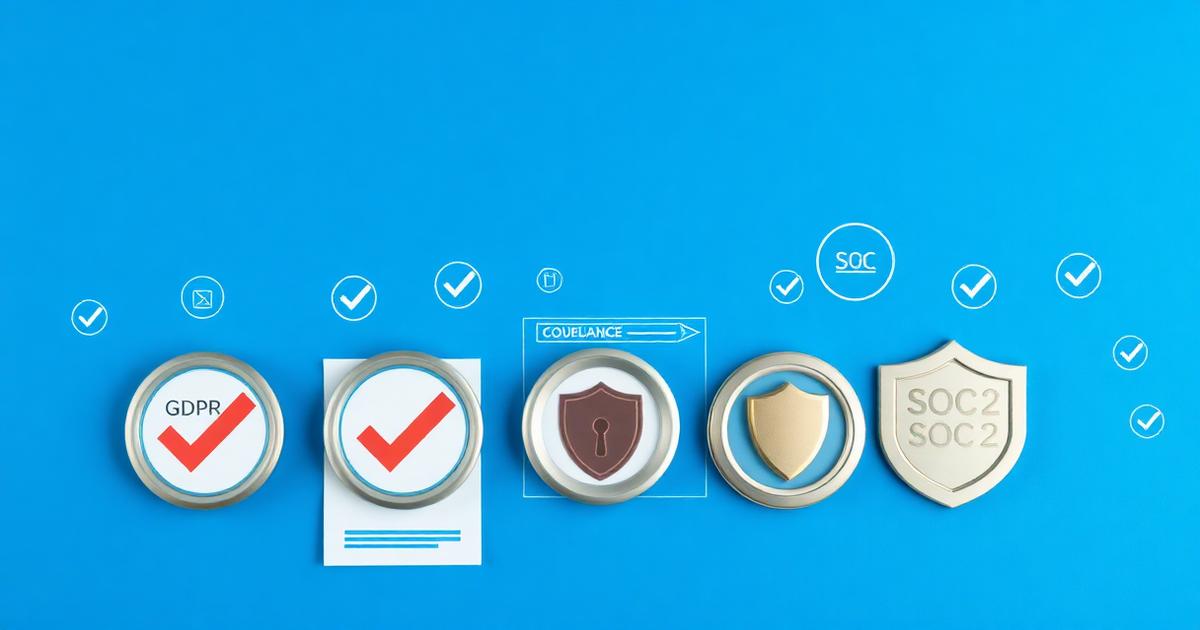
Compliance regulations can seem overwhelming for small businesses, often perceived as bureaucratic requirements that drain resources without adding value. This perspective misses a critical insight: compliance frameworks provide structured approaches to cybersecurity that improve your security posture while meeting legal obligations. Whether you handle EU citizen data (GDPR), protected health information (HIPAA), or need to demonstrate security to enterprise customers (SOC 2), compliance affects small businesses more than ever. Non-compliance risks are substantial: GDPR fines up to €20 million or 4% of global revenue, HIPAA penalties up to $1.5 million per violation, and loss of customers who require SOC 2 certification. This guide demystifies these frameworks and provides practical implementation guidance for resource-constrained small businesses.
GDPR Fundamentals for Small Businesses
The General Data Protection Regulation (GDPR) applies to any business processing personal data of EU residents, regardless of where the business is located. Personal data includes obvious identifiers like names and email addresses, but also IP addresses, cookies, and any data that could identify individuals. GDPR is built on seven principles: lawfulness, fairness, transparency, purpose limitation, data minimization, accuracy, storage limitation, integrity, confidentiality, and accountability. Practical implementation starts with data mapping—document what personal data you collect, why, how you use it, where it's stored, and who accesses it. Establish legal basis for processing: consent, contract fulfillment, legal obligation, vital interests, public task, or legitimate interests. Implement data subject rights: access, rectification, erasure ('right to be forgotten'), data portability, and objection to processing. Update privacy policies to clearly explain data practices. Implement security measures appropriate to risk: encryption, access controls, and breach detection. Appoint a Data Protection Officer (DPO) if required—generally when core activities involve regular, systematic monitoring of individuals at large scale or special categories of data. Document everything—GDPR emphasizes accountability, meaning you must demonstrate compliance.
HIPAA Requirements and Implementation
The Health Insurance Portability and Accountability Act (HIPAA) applies to covered entities (healthcare providers, health plans, healthcare clearinghouses) and business associates (service providers handling PHI). If you provide services to healthcare organizations, you're likely a business associate requiring HIPAA compliance. HIPAA has three main rules: Privacy Rule governs PHI use and disclosure, Security Rule mandates safeguards for electronic PHI (ePHI), and Breach Notification Rule requires reporting breaches affecting 500+ individuals. The Security Rule is most relevant for small businesses, requiring administrative, physical, and technical safeguards. Administrative safeguards include: security management process with risk analysis and risk management, workforce security procedures, information access management, security awareness training, and incident response procedures. Physical safeguards include: facility access controls, workstation and device security, and media disposal procedures. Technical safeguards include: access controls, audit controls, integrity controls, transmission security (encryption), and authentication. HIPAA distinguishes between 'required' and 'addressable' specifications—addressable doesn't mean optional but allows flexibility in implementation based on risk assessment. Document your risk analysis, policies, procedures, training records, and business associate agreements.
SOC 2 Certification Process
System and Organization Controls (SOC) 2 is an auditing standard developed by AICPA for service providers storing customer data in the cloud. Enterprise customers increasingly require SOC 2 reports from vendors. SOC 2 is based on five Trust Service Criteria: Security (foundational), Availability, Processing Integrity, Confidentiality, and Privacy. Most organizations start with Security, adding others as needed. SOC 2 Type I examines control design at a point in time, while Type II examines operating effectiveness over 3-12 months—Type II is more valuable and commonly requested. Preparation involves: define scope (which systems and data), select Trust Service Criteria, document policies and procedures, implement required controls, collect evidence of control operation, and engage a licensed CPA firm for audit. Common control categories include: risk assessment, logical and physical access controls, system operations, change management, and incident response. The audit produces a report describing your systems, controls, auditor testing, and results. Implementation typically takes 6-12 months for first-time certification. SOC 2 isn't a certification in the traditional sense—there's no pass/fail. Auditors report control effectiveness, and customers make their own risk decisions based on the report.
Building a Compliance Program
Approach compliance systematically. Start with gap analysis: assess current practices against requirements to identify deficiencies. Prioritize gaps based on risk and effort required. Develop policies and procedures documenting how you'll meet each requirement. Policies are high-level statements of intent; procedures are step-by-step instructions for implementation. Implement technical controls: encryption, access management, monitoring, and backup systems. Many controls satisfy multiple frameworks simultaneously—encryption addresses GDPR security requirements, HIPAA technical safeguards, and SOC 2 security criteria. Document everything meticulously—documentation proves compliance. Use a GRC (Governance, Risk, and Compliance) platform to manage policies, track controls, and collect evidence. Assign responsibility clearly—appoint a compliance officer or distribute responsibilities across the team. Budget adequately: compliance requires investment in tools, training, consulting, and audits. Plan for ongoing compliance, not just initial certification—requirements evolve and must be maintained continuously.
Training and Awareness
Compliance isn't just technology—people are critical. Conduct regular training on relevant regulations and your organization's policies. General training for all employees should cover: data handling practices, security awareness, incident reporting, and privacy principles. Role-specific training for employees handling sensitive data should dive deeper into applicable requirements. Document training completion—many regulations require training records. Make training engaging: use real-world examples, interactive scenarios, and regular refreshers rather than annual PowerPoint marathons. Test comprehension through quizzes or simulated scenarios. Create job aids and quick reference guides for common tasks like responding to data subject requests or reporting security incidents. Foster a culture where compliance is everyone's responsibility, not just the compliance team's. Encourage questions and reporting of potential issues without fear of punishment.
Audits, Assessments, and Continuous Improvement
Compliance isn't achieving certification and forgetting it—continuous monitoring and improvement are essential. Conduct internal audits quarterly or semi-annually to verify controls are operating effectively. Use audit findings to improve processes before external auditors discover issues. Engage external auditors or consultants periodically for independent assessment. Respond promptly to audit findings with corrective action plans. Monitor regulatory changes—all these frameworks evolve. Subscribe to regulatory updates, join industry associations, and engage legal counsel specializing in privacy and security law. Track metrics: policy violations, training completion rates, incident response times, and audit findings. Use metrics to demonstrate improvement and inform resource allocation. Conduct management reviews quarterly to assess compliance program effectiveness and make strategic decisions. Treat compliance as a business enabler, not just a cost center—strong compliance programs build customer trust, reduce legal risk, and often improve operational efficiency.
Conclusion
Compliance doesn't have to be overwhelming for small businesses. Start with understanding which regulations apply to your business. Focus on fundamentals: data protection, access control, encryption, and documentation. Leverage frameworks' alignment—many controls satisfy multiple requirements. Consider compliance as a journey of continuous improvement rather than a destination. Many cloud providers offer compliance-ready services that handle infrastructure controls, allowing you to focus on application and organizational controls. Engage experts when needed: legal counsel for regulatory interpretation, consultants for implementation guidance, and auditors for certification. The investment in compliance pays dividends through reduced risk, improved security, customer trust, and access to larger customers requiring compliance demonstration. Small businesses that approach compliance strategically gain competitive advantage in an increasingly regulated business environment.
About the Author
Bleach Security Team is part of the Bleach Security team, specializing in cloud security, compliance, and helping businesses protect their digital assets.
Published on October 18, 2025
Ready to Enhance Your Cybersecurity?
Discover how Bleach Security can help protect your business with our comprehensive security solutions.
Related Articles

Data Backup and Disaster Recovery: The Complete SMB Playbook for 2026
Backups are only as good as your last successful restore. Learn how to build a modern, ransomware-resilient backup and disaster recovery strategy that keeps your small business running through any incident.
Cyber Insurance for Small Businesses: What You Need to Know in 2026
A single data breach can cost a small business hundreds of thousands. Cyber insurance is no longer optional — here's how to choose the right policy and avoid costly coverage gaps.